Key takeaways
- $CABZ from Roundhill is the only ETF built specifically around robotaxis. It is actively managed, charges 0.59% and is still tiny at $2.4M.
- On September 30, 2026, CABZ held 29 stocks. Its top 5 were Tesla (8.44%), Alphabet (6.19%), Uber (5.46%), Baidu (5.25%) and WeRide (5.05%), and about 34% of the fund was in China.
- $ARKQ is the bigger, older way to get robotaxi exposure. Tesla was about 12.6% of the fund in late October 2026, with Nvidia, Alphabet and Amazon also in the top holdings.
- The real robotaxi businesses are still small slices of giant companies. Waymo sits inside Alphabet's Other Bets, which had $372 million in revenue and a $2.05 billion operating loss in Q3 2026.
- Watch the fine print: the SPDR smart mobility ETF ($HAIL) is closing in February 2027, and most EV funds are mostly batteries and carmakers, not robotaxis.
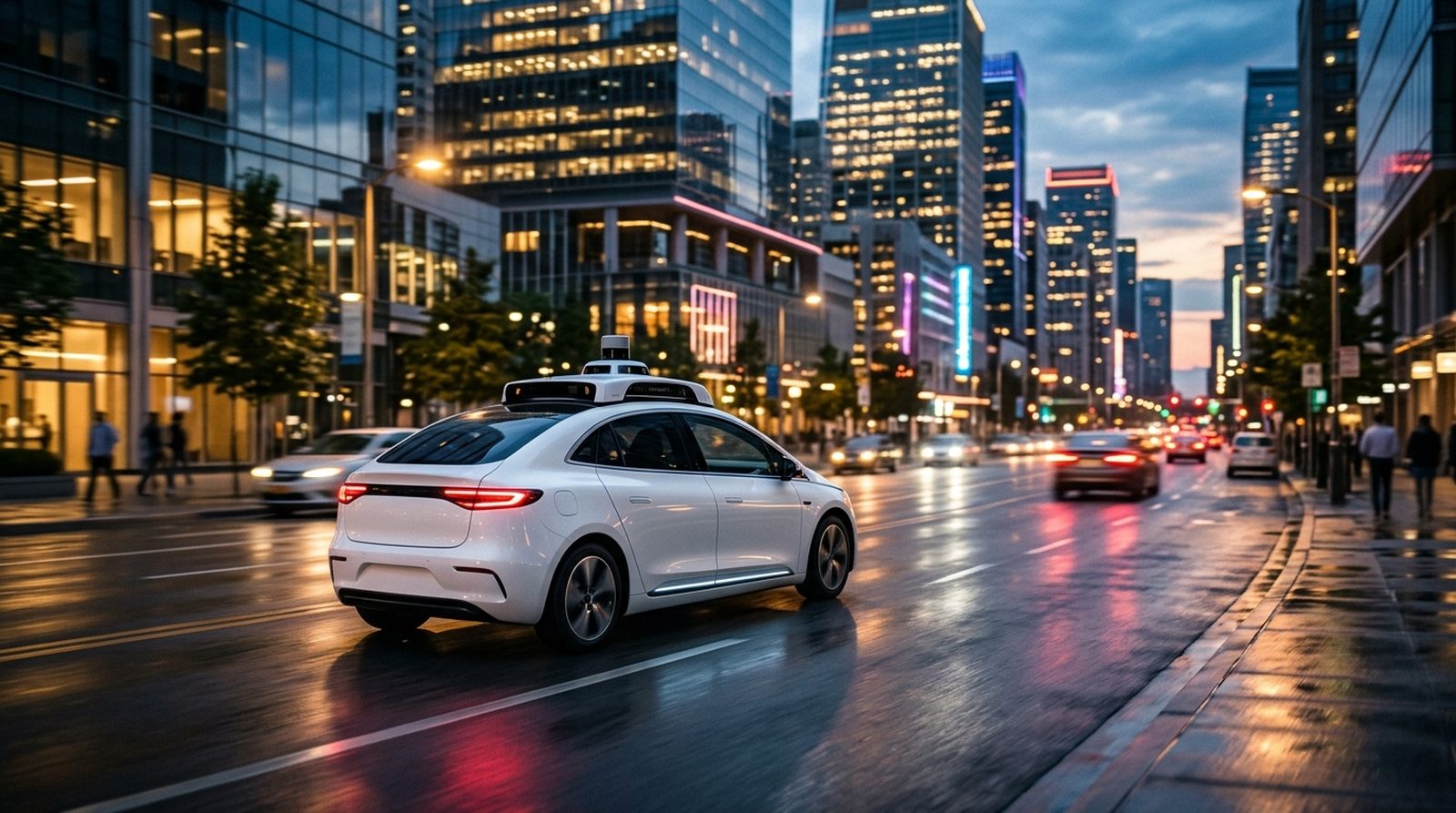
If you want a robotaxi ETF, there is really one fund built for it: $CABZ, the Roundhill Robotaxi, Autonomous Vehicles & Technology ETF. It launched in January 2026, charges 0.59% a year, and owns about 30 companies led by Tesla, Alphabet (Waymo), Uber, Baidu and WeRide. If you want something bigger and more established, $ARKQ has the most robotaxi-related exposure of the older funds, mostly through its large Tesla position.
Robotaxis went from science project to real business faster than almost anyone expected. Waymo is giving hundreds of thousands of paid rides a week, Tesla is running cars with nobody inside in six Texas and Florida cities, and Chinese operators are scaling in China and the Middle East. So people are searching for a simple way to invest in it. I went through the fund fact sheets, the issuers' holdings and the latest earnings reports to figure out what you actually get with each option. Here is the full breakdown.
The quick answer: robotaxi ETFs compared
Here is every ETF I found with meaningful self-driving exposure, ranked by how directly it targets robotaxis. Figures are from each issuer's site in October and November 2026.
| ETF | Focus | Fee | Size | Robotaxi purity |
|---|---|---|---|---|
| $CABZ | Robotaxis and AV tech, active | 0.59% | $2.4M | High: the only dedicated fund |
| $ARKQ | Autonomy, robotics, space, active | 0.75% | $1.60B | Medium: Tesla is its biggest bet |
| $DRIV (Global X) | Autonomous and electric vehicles | 0.68% | $299M | Low to medium: broad tech and carmakers |
| $IDRV (iShares) | Self-driving, EVs and batteries | 0.48% | $122M | Low: mostly batteries and EV makers |
| $KARS (KraneShares) | EVs and future mobility | 0.69% | $65M | Low: no Alphabet, Uber, Baidu or Nvidia |
| $HAIL (SPDR) | Smart mobility | 0.45% | $16M | Closing in February 2027 |
Source: RobotETFs fund data, updated November 26, 2026.
The fee chart puts CABZ next to the two biggest classic robotics funds for reference. CABZ is actually one of the cheaper options in the robotics space, which surprised me for a new, actively managed theme fund.
CABZ: the only dedicated robotaxi ETF
$CABZ started trading on January 14, 2026 on Cboe BZX. Roundhill describes it as a way to get exposure to "companies across the self-driving and robotaxi ecosystems." That covers four kinds of businesses: companies that build self-driving systems and hardware, companies that make the vehicles, companies that run robotaxi services, and the infrastructure behind them.
A few basics that matter:
- It is actively managed. Roundhill's investment committee picks the stocks. There is no index, so the holdings can change any day.
- It is concentrated. The fund is non-diversified and concentrated in consumer discretionary and technology stocks. The top 10 holdings were about 53% of the fund at the end of September.
- It is very small. The fact sheet showed $3.2 million in assets and 160,000 shares on September 30, 2026. Today it holds $2.4M. Small funds can have wider bid-ask spreads and a higher risk of closing, so use limit orders.
- It has had a rough start. Since its launch, CABZ returned -20.91% at NAV through September 30, 2026. That is the risk of buying a theme near the peak of its hype.
CABZ top 10 holdings
From Roundhill's fact sheet dated September 30, 2026:
| # | Company | Robotaxi angle | Weight |
|---|---|---|---|
| 1 | Tesla ($TSLA) | Robotaxi service and the Cybercab | 8.44% |
| 2 | Alphabet ($GOOGL) | Owns most of Waymo | 6.19% |
| 3 | Uber ($UBER) | Ride-hailing platform for robotaxi partners | 5.46% |
| 4 | Baidu ($BIDU) | Apollo Go, China's largest robotaxi service | 5.25% |
| 5 | WeRide ($WRD) | Robotaxis in China and the Middle East | 5.05% |
| 6 | Pony AI ($PONY) | Robotaxis in China, Europe and Asia | 4.72% |
| 7 | Ouster ($OUST) | Lidar sensors | 4.55% |
| 8 | Nvidia ($NVDA) | AI chips and the DRIVE platform | 4.49% |
| 9 | RoboSense | Lidar sensors (Hong Kong listed) | 4.31% |
| 10 | Amazon ($AMZN) | Owns Zoox | 4.20% |
I like how this list is built. It is not just Tesla with some filler. You get the three main business models: the operators (Waymo through Alphabet, Baidu, WeRide, Pony), the platform that sells the rides (Uber), and the picks-and-shovels suppliers (Nvidia, Ouster, RoboSense). By size, about 49% was in large companies, 34% in mid-size and 17% in small companies.
The country mix is the part to think about. On September 30 the fund was 55% United States and about 34% China, with smaller pieces in Israel, Ireland, Singapore and Hong Kong. That is not a flaw. China really is one of the two big robotaxi markets. But it adds political and regulatory risk that a US-only fund would not have.
ARKQ: the bigger fund with real robotaxi exposure
$ARKQ is ARK Invest's autonomous technology and robotics fund. It has been around since September 30, 2014 and holds $1.60B, which makes it hundreds of times bigger than CABZ. I already did a full ARKQ review, so here is just the robotaxi angle.
In late October 2026, Tesla was ARKQ's largest holding at about 12.6% of the fund. Nvidia (about 5.8%), Alphabet (about 4.1%) and Amazon (about 3.5%) were also in the top 10. So roughly a quarter of the fund sat in the four biggest robotaxi stories in the US.
The catch is everything else. ARKQ also owns space, defense, drone and industrial automation companies. It is a bet on autonomy in general, not robotaxis in particular, and it carries ARK's typical concentration in a few high-conviction names. If Tesla has a bad quarter, ARKQ feels it.
Other self-driving ETFs (and why I would be careful)
Search for "self-driving ETF" and you will find a few older funds. Here is what is actually inside them.
$DRIV: Global X Autonomous & Electric Vehicles
$DRIV charges 0.68% and held $299 million across 74 stocks on November 10, 2026. Its largest positions that day were Microsoft (4.83%), Tesla (3.46%) and Toyota (3.32%). It is a broad mix of tech companies, chipmakers, carmakers and battery materials. You do get some Alphabet and Nvidia, but robotaxis are a small part of the story.
$IDRV: iShares Self-Driving EV and Tech
$IDRV is the cheapest of the group at 0.48% and held about $122 million in 53 stocks in November 2026. Despite "self-driving" in the name, the most recent top 10 I could find was dominated by battery makers and EV companies like Samsung SDI, BYD, LG Energy Solution and Rivian. This is an EV and battery fund first.
$KARS: KraneShares Electric Vehicles & Future Mobility
$KARS charges 0.69% and held about $65 million on November 11, 2026. Tesla was about 5.2%, but Alphabet, Uber, Baidu and Nvidia were not in the fund at all. If you want robotaxis, this is the wrong fund.
$HAIL: SPDR S&P Kensho Smart Mobility (closing)
Do not buy $HAIL for the long term. State Street's fund page says the fund is being liquidated. The last creation day is February 17, 2027, trading stops at the open on February 18, 2027, and holders get cash around February 24, 2027. It only had about $16 million in assets.
The pattern is clear. Most "self-driving" funds launched years ago, when autonomy and EVs were sold as one theme. Since then, EVs and batteries took over those portfolios. If robotaxis are what you care about, read the top 10 before you trust the fund name.
The robotaxi stocks behind these funds
Whether you buy an ETF or pick stocks yourself, these are the companies that will decide how this theme plays out.
| Company | Ticker | Role | Where it stands (latest reported) |
|---|---|---|---|
| Alphabet (Waymo) | $GOOGL | Operator | 15 US cities, over 300M fully autonomous miles |
| Tesla | $TSLA | Operator and vehicle maker | No safety monitor in 6 cities, Cybercab rides in Austin |
| Baidu (Apollo Go) | $BIDU | Operator | 28 cities, driverless service in Dubai |
| Pony.ai | $PONY | Operator | 1,975 robotaxis, aiming for 3,500+ by year-end |
| WeRide | $WRD | Operator | 1,800+ robotaxis, driverless in Abu Dhabi and Dubai |
| Uber | $UBER | Platform | Sells rides for Waymo, Baidu, WeRide and Pony |
| Amazon (Zoox) | $AMZN | Operator and vehicle maker | Purpose-built robotaxis, Las Vegas and San Francisco first |
| Nvidia | $NVDA | Supplier | AI chips and the DRIVE Hyperion platform |
| Mobileye | $MBLY | Supplier, future operator | Plans its own robotaxi fleet starting in 2027 |
| Ouster, Hesai, RoboSense | $OUST, $HSAI | Suppliers | Lidar sensors |
Waymo (Alphabet): the clear leader
Waymo is the robotaxi company everyone else is chasing. On Alphabet's Q3 2026 call, Sundar Pichai said Waymo operates in 15 major US cities, recently opened public service in San Antonio, San Diego and Tampa, and has driven more than 300 million fully autonomous miles. He also mentioned planned expansions into Canada, Germany, Singapore and Spain, on top of the London and Tokyo plans announced earlier in the year.
The ride growth is the headline. Waymo was doing about 50,000 paid rides a week in May 2024. By March 2026 it was at 500,000 a week, and the company's stated goal is 1 million a week by the end of 2026. Waymo raised $16 billion at a $126 billion valuation in February 2026 and closed a $5 billion loan in October.
Here is the part most people miss. Waymo is still a small piece of Alphabet. It is reported inside "Other Bets," which brought in $372 million in revenue in Q3 2026 and lost $2.05 billion. Alphabet's total revenue that quarter was $127.6 billion. So buying $GOOGL for Waymo means you are mostly buying Google Search, YouTube and Google Cloud, with a robotaxi option attached.
Tesla: the biggest weight in most funds
Tesla is the top holding in both CABZ and ARKQ, and it is the most debated robotaxi stock in the market. According to Tesla's October 21, 2026 safety report, its Robotaxi service has driven about 3.1 million miles with no safety monitor in the car, across Austin, Dallas, Houston, Orlando, Tampa and Miami. Austin is by far the largest at over 2.1 million of those miles. The Bay Area service still uses a safety driver. Tesla named Las Vegas, Jacksonville, Phoenix and San Antonio as coming next.
The Cybercab, Tesla's two-seat robotaxi with no steering wheel, started paid rides in Austin in early September 2026, and Austin has more than 300 of them on the road. On the Q3 call, Tesla said more Cybercab cities are planned before the end of 2026 and that some customer-owned cars could join the robotaxi network around Q2 2027.
The risks are real too. NHTSA opened an investigation in September 2026 into how Tesla certified the Cybercab under federal vehicle safety standards, and Tesla's timelines have slipped many times before. Tesla also lets you reach the robotaxi theme while owning a carmaker and energy company, which is why its weight drives so much of these funds' returns.
Baidu, Pony.ai and WeRide: the China side
China is the other big robotaxi market, and these three are a big part of why CABZ is about a third China.
- Baidu's Apollo Go was in 28 cities as of its Q2 2026 report, with more than 240 million fully driverless kilometers. It runs fully driverless commercial service in Dubai, where rides are also available in the Uber app, and it is testing in London with both Uber and Lyft.
- Pony.ai had 1,975 robotaxis on June 30, 2026 and is targeting more than 3,500 by the end of the year. Its Q2 robotaxi revenue was $12.1 million, up 691% from a year earlier, and it has a contracted deal to deploy more than 2,000 robotaxis in Europe with Uber.
- WeRide had about 1,800 robotaxis within a 3,400-vehicle fleet at the end of July 2026, runs fully driverless robotaxis in Abu Dhabi and Dubai, and grew Q2 revenue 82% to $34.2 million. It is working with Uber on launches in Madrid and Zurich.
Notice the size of those revenue numbers. These are fast-growing but still small businesses that lose money. Baidu, Pony and WeRide all report Q3 2026 results between November 16 and November 20, so expect big moves in those stocks, and in CABZ, that week.
Uber, Nvidia and the picks-and-shovels
Not every winner has to run its own cars. Uber is turning itself into the storefront for robotaxis. Riders in Austin and Atlanta book Waymo through Uber, and Uber has deals with Baidu, WeRide and Pony in the Middle East and Europe. If robotaxis win but no single operator dominates, a platform that works with all of them could do well.
Nvidia sells the AI chips that train self-driving models and the DRIVE Hyperion platform that some robotaxi makers build on. Pony's new deployment in Kazakhstan, for example, is built on Nvidia Hyperion. Mobileye announced in June 2026 that it will start its own robotaxi business, with about 100 driverless vehicles in a major US city beginning in 2027 and a target of about 17,000 vehicles over the following five years. And the lidar makers (Ouster, Hesai, RoboSense) sell the laser sensors many robotaxis rely on.
If you want the chip side of autonomy without the carmakers, my guide to robotics ETFs vs AI ETFs covers funds like $AIQ that hold Nvidia and other AI suppliers.
Robotaxi ETF or robotaxi stocks?
This is the question I would actually spend time on. Here is how I think about it:
| Robotaxi ETF ($CABZ) | Picking stocks | |
|---|---|---|
| Best for | Owning the whole theme without guessing the winner | Investors with a strong view on one company |
| Cost | 0.59% a year, about $59 on $10,000 | No fund fee |
| Exposure to China operators | Built in, about a third of the fund | Your choice |
| Single-company risk | Limited, top holding under 10% | High |
| Fund risks | Small size, wider spreads, could close | None |
For most people, I think the honest answer is that you probably already own some robotaxi exposure. If you hold an S&P 500 or Nasdaq-100 fund, you own Alphabet, Tesla, Amazon, Nvidia and Uber. A dedicated fund like CABZ makes sense as a small add-on if you want more of the smaller operators and suppliers. I would not make it a core holding. If you lean toward growth funds in general, our sister site GrowthETFs.com compares the big growth ETFs that already hold most of these names.
The risks of investing in robotaxis
I cover the general risks in the risks of robotics ETFs, but robotaxis have a few of their own:
- Regulation. Every city and country decides whether driverless cars can operate. One serious crash can pause service, as Waymo's freeway pause and its recalls in 2026 showed.
- Timelines slip. Self-driving has been "two years away" for a decade. Even now, the timelines from Tesla and others keep moving.
- Losses. Waymo's segment lost $2.05 billion in one quarter. Pony and WeRide are not profitable yet. Profits depend on cheaper hardware and far more rides per car.
- China risk. About a third of CABZ is in Chinese companies, which brings trade, sanctions and delisting risk.
- Fund size. CABZ is very small. Small, new theme ETFs close more often than big ones. $HAIL closing is a good reminder.
- Hype. CABZ was down about 21% from its January launch through September. A great story does not guarantee a good entry price.
The bottom line
Robotaxis are real now. Waymo is heading toward a million paid rides a week, Tesla is running cars with nobody inside, and China's operators are scaling in multiple countries. But the investable options are still thin.
If you want one fund that targets robotaxis directly, $CABZ is it. It is diversified across operators, platforms and suppliers, and its fee is reasonable, but it is tiny and about a third China. If you want something bigger, $ARKQ gives you heavy Tesla exposure plus a wider autonomy basket. I would skip $HAIL, since it is closing, and read the holdings of any "self-driving" fund before trusting the name. For the drone side of autonomy, see my guide to drone and robotaxi ETFs, and for every robotics fund side by side, start with the best robotics ETFs.
Whatever you pick, keep it sized like what it is: an early, volatile bet on a technology that could change how people get around. This is not financial advice. Do your own research.
Sources and methodology
Fund figures (assets, expense ratios, yields, launch dates) come from our RobotETFs data sheet, which we check against issuer materials and refresh daily. Always confirm the latest numbers with the issuer before investing.
- Roundhill: CABZ fund page
- Roundhill: CABZ fact sheet (September 30, 2026)
- Fortune: Waymo, Alphabet Other Bets results (October 30, 2026)
- Alphabet Q3 2026 earnings call transcript (October 29, 2026)
- TechCrunch: Waymo ridership chart (March 27, 2026)
- Tesla Q3 2026 earnings call recap (October 22, 2026)
- Tesla Robotaxi safety report and next cities (October 21, 2026)
- Baidu: Q2 2026 results
- Pony.ai: Q2 2026 results
- WeRide: Q2 2026 results
- Mobileye: vertically integrated robotaxi business (June 16, 2026)
- ARK Invest: ARKQ fund page
- Global X: DRIV fund page
- iShares: IDRV fund page
- State Street: HAIL fund page and liquidation notice
- KraneShares: KARS fund page
Frequently asked questions
Is there a robotaxi ETF?
Yes. The Roundhill Robotaxi, Autonomous Vehicles & Technology ETF (CABZ) launched on January 14, 2026 and is the only ETF built specifically around robotaxis. It is actively managed and charges 0.59% a year. ARKQ from ARK Invest is a larger fund with heavy Tesla exposure, but it also owns space, defense and industrial robotics companies.
What are CABZ's holdings?
On September 30, 2026, CABZ held 29 stocks. The top 10 were Tesla 8.44%, Alphabet 6.19%, Uber 5.46%, Baidu 5.25%, WeRide 5.05%, Pony AI 4.72%, Ouster 4.55%, Nvidia 4.49%, RoboSense 4.31% and Amazon 4.20%. Because the fund is active, these change, so check Roundhill's daily holdings.
What are the best robotaxi stocks?
The biggest names are Alphabet (Waymo), Tesla (Robotaxi and Cybercab), Baidu (Apollo Go), Pony.ai, WeRide, Uber as the ride-hailing platform, Amazon (Zoox), and suppliers like Nvidia, Mobileye and lidar makers such as Ouster, Hesai and RoboSense. Which one fits you depends on how much risk you want. This is not financial advice.
Is Waymo a public company?
No. Waymo is owned mostly by Alphabet and reported inside Alphabet's Other Bets segment. It raised $16 billion at a $126 billion valuation in February 2026. The main way to own a piece of it in the stock market is through Alphabet stock or funds that hold Alphabet.
Does CABZ pay a dividend?
CABZ is set up to pay distributions once a year, but robotaxi companies are growth companies that pay little or nothing. Expect the yield to be close to zero. This is a growth fund, not an income fund.
RobotETFs.com is published by Dividend Empire LLC for informational and educational purposes only and does not constitute investment, financial, tax or legal advice. Nothing here is a buy or sell signal. Fund data comes from our own data sheet and issuer materials, is refreshed daily and can be delayed, incomplete or incorrect. Always verify against the issuer's website and prospectus, do your own research and consult a licensed financial professional. Past performance does not guarantee future results. Investing involves risk, including possible loss of principal. Leveraged ETFs reset daily and are not suitable for most long-term investors. Price charts are provided by TradingView and may be delayed.